Staying on Track in Edmentum: A Pacing Guide
A practical pacing guide for Edmentum. Plan your Plato course, build a steady study routine, and prepare for mastery tests without falling behind.

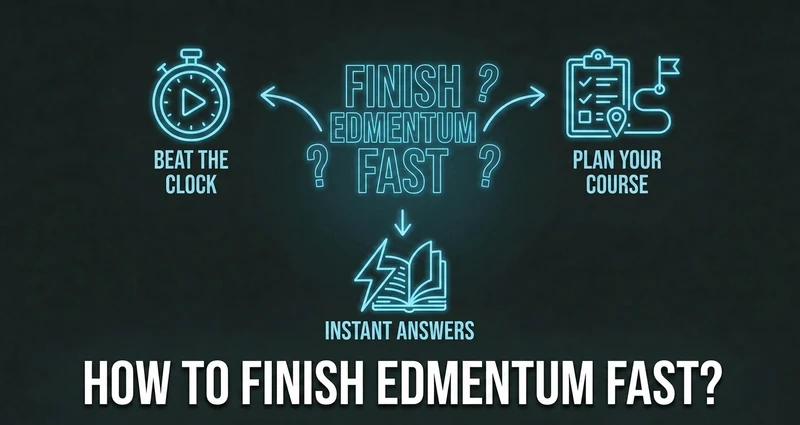
Why Edmentum Courses Can Feel Long
Edmentum is a self-paced learning platform used by thousands of schools, powering programs like Plato Courseware, Exact Path, and Study Island. The platform lets you work at your own speed, but the volume of readings, practice activities, lessons, and mastery tests can make a course feel endless. Most students underestimate how many activities sit inside a single semester.
The good news is that staying on track is very doable. With a clear plan and a steady routine, a Plato course turns from a wall of work into a checklist you move through day by day, while actually understanding what you study.
In this guide, we will walk you through five practical steps to pace yourself through Edmentum. By the end, you will have a clear roadmap for your course and a routine you can keep up until the final exam.
Step 1: Map Out the Entire Course Before You Start
The biggest mistake students make is diving into Edmentum without a plan. Before you open a single lesson, take fifteen minutes to scan the entire course outline. Knowing what is ahead helps you spend your time where it matters.
How to Build Your Roadmap:
- Open your course dashboard and view the full unit and lesson list
- Note which activities count toward your grade and which are practice
- Identify the weight of each mastery test and unit exam
- Set a realistic daily target that fits your deadline
- Mark any locked lessons that depend on completing earlier work
Once you can see the whole course on one page, the work suddenly feels manageable. A daily target also makes it obvious early on if you are starting to fall behind.
Step 2: Know How Mastery Tests Shape Your Course
Not every activity in Edmentum carries the same weight. Some lessons are tutorials, journal prompts, or supplemental videos that reinforce concepts without appearing in the gradebook. Knowing the difference helps you plan your week, but the tutorials are still where much of the learning happens.
What to Track:
- Mastery tests, which feed into your grade and unlock the next section
- End-of-lesson quizzes and checkpoints
- Unit tests and any cumulative final exam
- Any activity flagged with a points value in the gradebook
- Study Island assignments your teacher has set as required
Use the tutorials and readings to build notes on key concepts. Students who understand the lesson tend to need fewer mastery test retakes, which keeps them on schedule.
Step 3: Work in Focused Study Sessions
Spreading Edmentum over weeks of short, distracted sessions makes it hard to keep concepts straight. Longer, focused blocks usually work better. Once your brain warms up to the material, it is easier to connect one lesson to the next.
How to Plan Your Sessions:
- Block out 90 to 120 minute sessions with no phone, social media, or notifications
- Aim to work through one unit at a time while the material is fresh
- Take a 10-minute break, then start the next block fresh
- Pick a number of sessions per day that fits your deadline
- Save retakes and corrections for the end of each session
Think of the course as a steady routine rather than a last-minute rush. Consistent daily sessions are what keep students on track through the whole semester.
Step 4: Use Practice to Prepare for Mastery Tests
Edmentum gives you a useful tool that many students overlook: the practice activities preview the concepts the mastery test will cover, and mastery tests often allow retakes depending on your school's settings. Treating practice as your study tool is often more effective than rereading the whole lesson.
How to Prepare for Mastery Tests:
- Work through the lesson's practice activity first to see which concepts are covered
- Note any questions you missed and review that part of the lesson
- Use the practice as a study guide for the mastery test itself
- Check your work carefully before submitting
- If retakes are allowed, review your mistakes before trying again
Studying from practice questions is one of the oldest study habits there is, and Edmentum's lesson-then-mastery-test structure makes it easy. You focus on the concepts the test actually covers.
Step 5: Prepare for Unit Tests and Finals
Much of your grade in Edmentum comes from mastery tests, unit tests, and the final exam. These are the moments to slow down and review, because they pull together everything you studied in each unit.
Best Practices for Tests:
- Review your mastery test history before each unit test, since the same concepts come back
- Go over your notes from each lesson in the unit
- Take the test in one focused sitting, not split across days
- Read each question carefully, because the wording matters
- Check your school's retake policy before you start
Once you submit the final exam, your course is complete. Students who kept a steady pace usually find the final far less stressful, because they reviewed as they went.
Tips for Staying on Pace in Edmentum
To make the most of your study time, here are the habits that help students stay on pace in Edmentum:
Pro Tips
- Keep your browser tabs organized: Lesson, practice, and notes side by side keep you focused
- Use a stable internet connection: Disconnects can wipe progress on long activities
- Watch the tutorial videos with notes open: Writing down key terms helps them stick
- Keep a formula and vocabulary sheet: A handy reference for review before each mastery test
- Track your daily progress: A visible streak keeps the momentum going
If you want to stay on pace, many students pair these strategies with SemSolved, a browser extension that explains Edmentum questions step by step as you study. As an AI Edmentum study assistant, it breaks each question down, so the material clicks instead of eating your afternoon.
Frequently Asked Questions
How long does an Edmentum course take?
It depends on the course, your deadline, and how much time you set aside each day. Building a daily target from the Plato course outline is the most reliable way to plan your semester.
Do I need to do the tutorials and readings?
Tutorials and readings are not scored directly, but they hold the concepts that mastery tests and unit tests cover. Using them to build notes makes test prep much easier.
Will my teacher know I am working ahead?
Edmentum is built for self-paced progress. Working ahead is encouraged, and teachers see your activity log as steady progress, not as anything unusual.
Can I retake mastery tests?
Many mastery tests allow retakes by default. Unit tests and finals depend on your school's settings. Always check your gradebook to see how many attempts are available before you submit.
What if I get stuck on a question?
Go back to the tutorial that covers the concept. If you are still stuck, tools like SemSolved can walk you through the reasoning step by step so you understand it and keep moving.